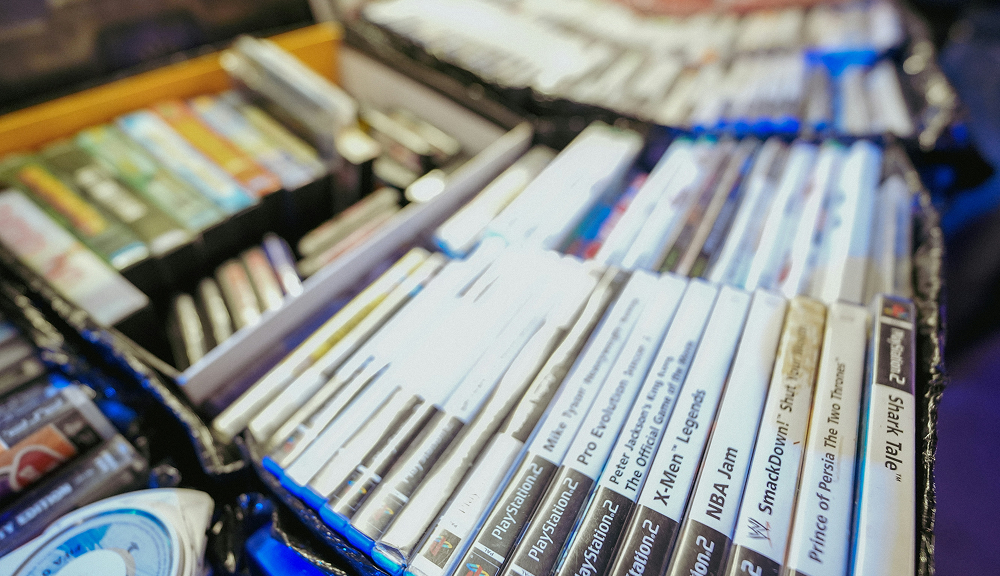
Video game preservation is harder than you think
Published
September 29, 2025
by Sebastien Krajka, Heritage Coordinator at AWA
When was the last time you thought about an old video game you loved?
Maybe it was a classic you played as a kid, or a title that defined your teenage years. Now here’s the scary part: chances are, you couldn’t play it today even if you wanted to.
That’s the harsh reality of video game preservation — most games disappear far faster than books, films, or music ever did.
When I say “video game preservation”, I’m not just talking about keeping a dusty cartridge or a scratched CD on a shelf. That’s the easy part.

What we’re really talking about is saving the entire experience — the software, the console or hardware it ran on, the servers it connected to, even the updates and patches that made it playable.
Think about it:
But a video game?
It’s a puzzle of moving parts. Without the right console, the right code, the right online service, the game you loved becomes nothing more than a memory.
That’s why preserving video games is such a unique challenge. You don’t only need to protect the files but it’s playability. Because if you don’t manage to install and play the game you kept on a CD, is it worth your keeping?
So why does all of this matter?
Well, because video games aren’t just entertainment — they’re part of our cultural memory. They capture the spirit of the time they were made: the technology, the art, the storytelling, even the social dynamics.
Think about how movies from the 50s or music from the 80s tell you something about those decades.

Imagine future generations never really knowing what it felt like to step into World of Warcraft for the first time, or the emotional punch of Final Fantasy VII, or even the simple joy of catching your first Pokémon on a Game Boy.
If we let these games disappear, we’re not just losing code.
We’re losing history, creativity, and culture. And honestly, that’s a huge deal.
Here’s where I stop sugarcoating:
In 2025, trying to preserve video games is almost like trying to catch smoke.
According to a study by the Video Game History Foundation, about 87 % of games released in the U.S. before 2010 are now out of print or effectively inaccessible.
That means 9 out of 10 of the games we might nostalgically think are safe are already endangered.
Even if you have a copy of the game, you often can’t run it—new computers don’t support old cartridges, CDs degrade, online servers shut down, DRM won’t let you.
For example, many once-popular online-only games now live solely in memories, because their infrastructure was turned off. The phenomenon is part of a larger risk known as the “digital dark age”, where data becomes unreadable as formats and hardware evolve.

In late 2024, the U.S. Copyright Office rejected a petition to broaden exemptions in the Digital Millennium Copyright Act (DMCA) that preservation groups hoped would let libraries and archives share games remotely for research.
Under current law, institutions can preserve but may only offer access on their premises—you can’t legally let someone in another city stream or access the game digitally from home.
The Office justified the decision by saying there was risk of market harm (that remote access might substitute for purchases) and that the proposals lacked enough safeguards.
Preservationists saw it as a huge setback — especially since it’s a three-year cycle: this ruling locks the status quo until at least the next review.
Many games are “orphan works”, meaning the rights holders are unknown or uncontactable.
Some companies no longer exist; their archives are lost, code discarded, and nobody left to authorize preservation.
In other cases, publishers deliberately let games “expire” when servers shut down or rights are dropped.
Fan communities and emulator projects often step in to save what they can. But because of copyright laws, they walk a legal tightrope — many efforts are unofficial or in legal grey areas.
Even when communities succeed in recovering games, the versions may be incomplete (missing patches, server logic, or original online multiplayer elements). And finally, the scale is brutal: every year, hundreds or thousands of new digital-only titles appear; if we don’t capture them quickly, they’ll vanish before anyone notices.

Here’s the good news: it doesn’t have to end with lost cartridges and shut-down servers.
While communities and preservation groups do an incredible job (often against the odds), they can’t carry the entire weight of history on their shoulders. That’s where AWA comes in.
At the Arctic World Archive, we’ve been safeguarding humanity’s cultural treasures for decades — films, books, artworks, scientific data, even entire national archives. All of it stored safely in a former mine, deep inside a mountain in Svalbard, Norway, one of the most stable and secure locations on Earth. And here’s the thing: video games deserve the same treatment.
Why? Because unlike community backups or temporary solutions, AWA offers something unique:
The truth is simple: if we don’t start preserving video games now, most of what defines gaming culture today will be gone tomorrow. But it doesn’t have to be that way.
If you’re a developer, publisher, archive, or part of a preservation community, I’d love to talk with you about how we can work together to keep the history of video games alive.
Contact me directly: Sebastien Krajka, Heritage Coordinator, AWA – [email protected]

Every act of preservation carries a moral weight. Art preservation is the delicate act of deciding which moments of human emotion will outlast us.
Read more
Discover how endangered languages can be preserved using new technologies — and how AWA leads the way in safeguarding humanity’s linguistic heritage.
Read more