How to preserve newspapers from fading away
Published
December 30, 2025
By Sebastien Krajka, Heritage Coordinator at AWA
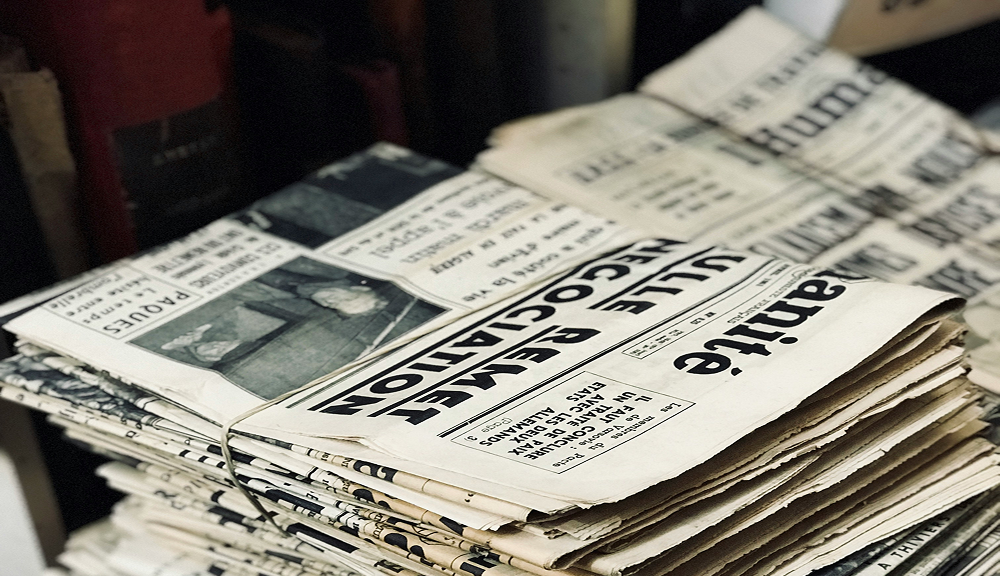
Walk into any archive, library, or local heritage center, and you will likely find them: newspapers carefully stored in boxes, bound volumes resting on shelves, pages already yellowed, sometimes brittle, often fragile.
They carry the voice of another time --- political debates, local stories, daily concerns --- yet the medium itself is slowly disappearing.
Newspapers were never designed to last. They were printed quickly, on inexpensive paper, meant to be read, folded, shared, and replaced the next day. And yet, over decades, they became something else entirely: primary historical sources. For historians, researchers, and institutions, newspapers are not just news --- they are a record of how societies understood themselves, day after day.
This creates a paradox we still face today:
Before thinking about technologies, formats, or storage locations, it is important to start with a simple reality: the first enemy of newspapers is the paper itself.
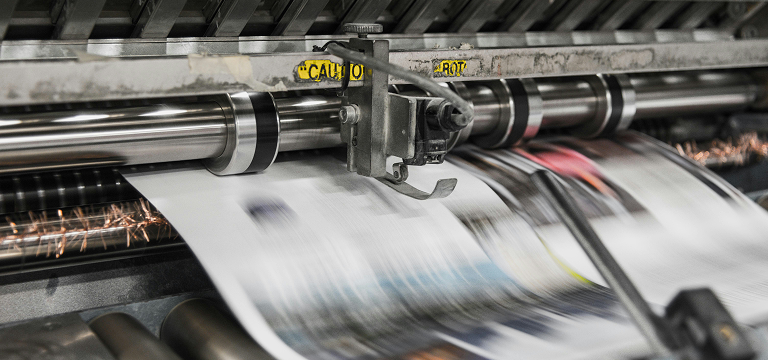
From the late 19th century onward, most newspapers were printed on wood-pulp paper. This material was inexpensive, easy to produce at scale, and perfectly suited for mass circulation. But it came with a hidden flaw. Wood pulp contains lignin and acidic compounds that, over time, slowly break down the paper from the inside.
This is why old newspapers yellow, become brittle, and eventually crumble when handled. Exposure to light accelerates the process. Humidity weakens the fibers. Even careful storage can only slow down what is, in the end, a chemical reaction already embedded in the material.
Unlike parchment or rag-based paper used in earlier centuries, newspapers were never designed with longevity in mind. Their expected lifespan was counted in days, not decades. Preservation, therefore, has always been a battle against the very nature of the medium.
For archives and libraries, this created an early dilemma. Keeping newspapers accessible meant handling them, which caused further damage. Protecting them meant restricting access, isolating them from light and use, and still accepting that degradation would continue.
Understanding this material fragility is essential. It explains why preserving newspapers has never been a matter of simple storage, and why each new generation of preservation technologies emerged not out of comfort, but out of necessity.
Because newspapers were never meant to last, institutions have spent more than a century experimenting with ways to slow down their disappearance. Each new preservation method was a response to the limitations of the previous one — and each solved part of the problem, but never all of it.
The earliest approach was also the most intuitive: keep the newspapers as they are, and protect them as carefully as possible. Libraries and archives bound issues into volumes, stored them in controlled environments, and limited handling to reduce damage.
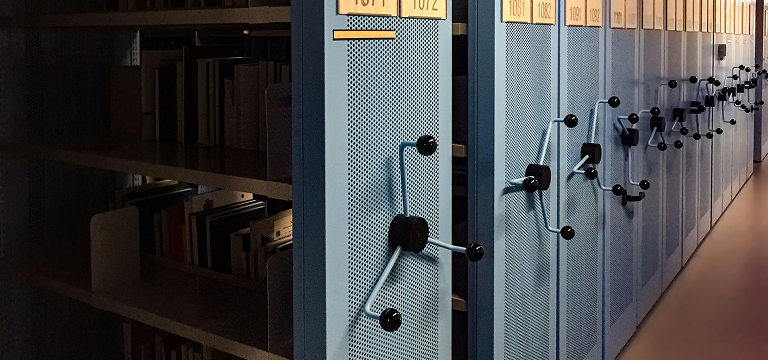
While this method preserved the original object, it came with significant constraints.
Paper degradation continued, even under ideal conditions. Storage required large amounts of space. Access had to be restricted, which limited research and public use. Physical conservation slowed the process, but it could not stop it.
In the mid-20th century, microfilm marked a turning point. For the first time, newspapers could be transferred onto a medium specifically designed for long-term preservation. Microfilm dramatically reduced storage requirements and, when produced and stored correctly, offered a lifespan far superior to newsprint.
For decades, microfilm became the standard solution for newspaper preservation worldwide. It allowed institutions to preserve content while protecting fragile originals from constant handling.
However, microfilm also introduced new dependencies: specialized readers, controlled duplication processes, and continued institutional knowledge to ensure usability over time.
With the rise of digital technologies, newspapers entered a new phase. Scanning and digitization transformed access.

Researchers could search full-text archives. Readers could explore collections remotely. For the first time, newspapers became widely available beyond physical archive walls.
But digitization solved a different problem: access, not preservation. Digital files depend on software, hardware, energy, and continuous maintenance. File formats evolve. Storage media fail. Data must be migrated again and again to remain readable.
In many cases, digitization added a new layer of fragility. The content survived, but its long-term readability became uncertain. What appeared permanent was, in reality, temporary by design.
This historical progression reveals a pattern. Each technology improved one aspect of preservation — material stability, storage efficiency, or accessibility — but none offered a complete answer to the challenge of keeping newspapers readable for centuries.
In today’s digital world, information appears permanent.
Newspapers are published online, duplicated instantly, and stored across multiple systems. Yet this apparent stability hides a growing fragility.
Digital files are not self-sufficient. They depend on hardware, software, file formats, energy, and continuous maintenance. Without regular migration and active management, data does not truly disappear — it simply becomes unreadable. Over time, technological change itself becomes the main threat.
For heritage institutions, this creates a paradox.
Digitization greatly improves access, but it also ties preservation to short technological life cycles. Systems must be updated, risks managed, and expertise maintained indefinitely.
Newspapers amplify this challenge. They are produced in large volumes, over long periods, and carry significant historical context. Preserving them digitally for the very long term becomes uncertain and resource-intensive.
As a result, many institutions find themselves caught between two fragile worlds: degrading paper originals and digital copies with no guaranteed future readability.
This preservation gap highlights a clear need for a solution designed not for years or decades, but for centuries.
If there is one lesson to be drawn from the history of newspaper preservation, it is that durability matters more than convenience. Microfilm was a major step forward because it introduced a stable, non-digital medium specifically designed for long-term storage. PiqlFilm builds on this same logic — but takes it further.
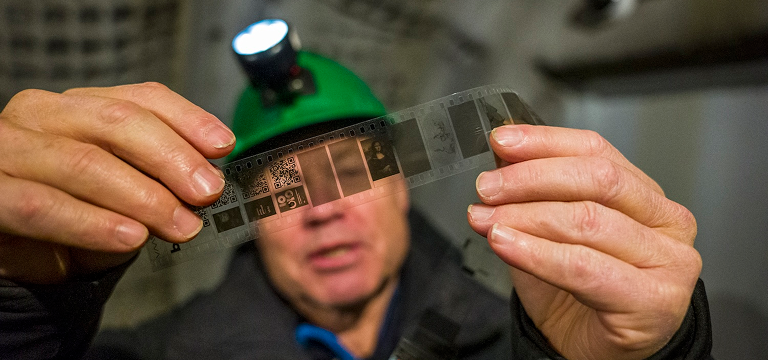
piqlFilm is a modern, standardized evolution of microfilm, designed to preserve digital content in an analog, human-readable form. Digital newspaper files are converted and written onto film in a way that does not depend on proprietary software or complex technological systems. Once recorded, the information no longer requires power, networks, or active maintenance to remain intact.
This approach is particularly well suited to newspapers. Their structured layouts, high volumes, and long-term historical value make them ideal candidates for a medium designed to remain readable for centuries. Text, images, and metadata can be preserved together, ensuring that future readers will not only see the content, but also understand its context.
At Arctic World Archive, piqlFilm is combined with a preservation environment designed for long-term stability.
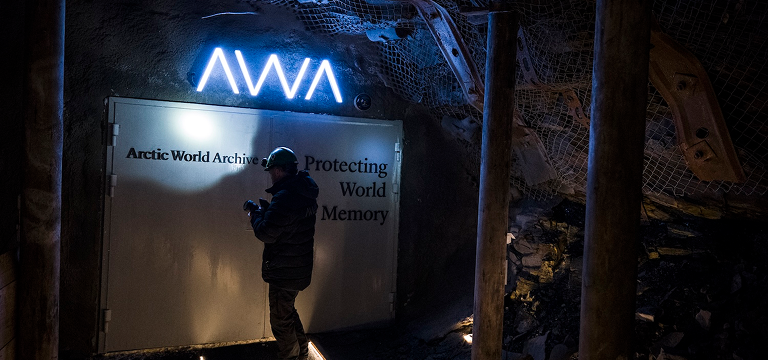
The films are stored deep inside a former coal mine in the Arctic, where natural conditions offer low humidity, stable temperatures, and minimal external risk. This setting is not chosen for symbolism alone, but for its practical contribution to long-term preservation.
Just as importantly, future readability is built into the preservation process itself. PiqlFilm includes visual instructions on how to access the content, ensuring that even without prior technological knowledge, future generations can understand how to retrieve the information.
Preserving newspapers in this way is not about replacing digital access or physical collections. It is about securing a final, stable reference copy — a long-term memory layer that protects the content beyond technological change. In doing so, PiqlFilm and the Arctic World Archive offer a continuity between past preservation practices and a future-oriented responsibility: keeping the daily voice of history readable, no matter how the world evolves.
Newspapers capture the everyday voice of history. They document not only major events, but also how societies spoke, debated, and understood the world around them.
Once lost, this perspective cannot be reconstructed.
Preserving newspapers is therefore not only a technical decision, but a cultural one. It reflects what we choose to pass on, and what we accept to forget. In an age of constant information flow, long-term preservation requires deliberate choices and long-term thinking.
Ensuring that today’s news remains readable far into the future is an act of responsibility toward generations we will never meet — but who will look back to understand who we were.
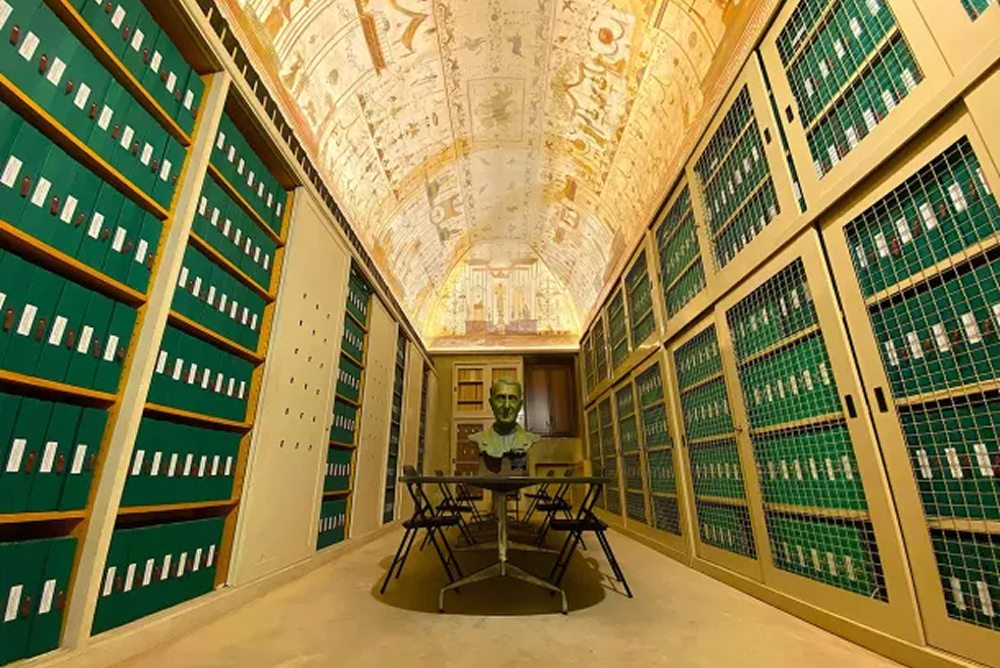
UNESCO Memory of the World protects documentary heritage of global importance. Discover how the Memory of the World works.
Read more
From manuscripts to endangered languages, 2024 has been inspiring. We welcome new participation in securing the future of human knowledge.
Read more
Get free access to the AWA platform and see how you can manage, preview, and prepare your preservation projects.
