Business legacy as a strategic corporate asset
Published
February 8, 2026
By Sebastien Krajka
A few years ago, back in the region where I grew up (North of France, if you really want to know), I had a long conversation with an old local business owner I’ve known since childhood.
His company was founded by his great-grandfather, then passed down to his grandfather, his father, and eventually to him. What started as a small, local workshop had quietly become an international business, exporting its expertise far beyond the borders of our place.
At the edge of retirement, he was not thinking at all about quarterly growth or exit strategies. He was talking about passing the company on to his two sons. Not just the shares or the buildings, but the story, the values, the mistakes, the hard years, and the decisions that shaped everything.
At some point, he said something very similar to this: “If we lose our history, we lose the reason this company exists.”
That sentence never left me.
Most modern companies are not built with centuries in mind. Yet the ones that endure --- the ones we trust instinctively --- are almost always those that carry a visible, preserved legacy. This is where business legacy stops being a romantic idea and becomes a strategic responsibility.
When people hear “legacy,” they often think of a few framed photos or a bunch of corporate videos, filmed some time in the past…
In reality, a true business legacy archive is much broader --- and much more fragile.
A corporate legacy archive typically includes:
What matters most is not only the format, but the context. A document without explanation loses meaning over time. A story without proof becomes folklore. A legacy archive must preserve both.
Over the years, I’ve seen companies choose very different paths when it comes to preserving their history:


Each approach solves part of the problem. None truly answers the question of very long-term survival.
This is where business legacy preservation becomes something else entirely: a long-term commitment that goes beyond branding or compliance.
To be meaningful across centuries, preservation must:
Some companies have already taken this step:
Jaguar, for example, became the first UK motor manufacturer to preserve its corporate history within the Arctic World Archive, choosing durability over convenience and centuries over decades.
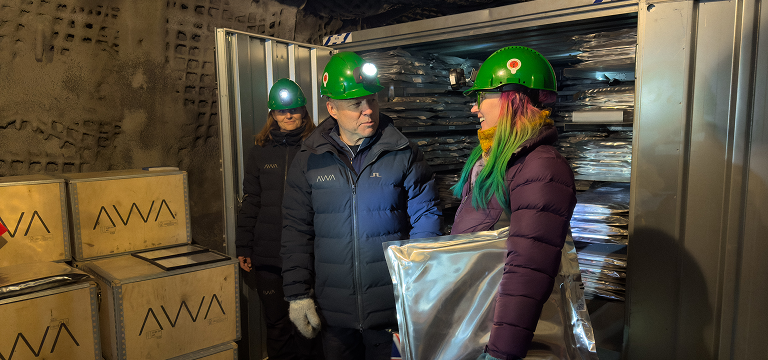
Soon, Guinness, a brand whose history is deeply intertwined with cultural and social heritage, will follow the same path, with preservation scheduled for February 2026.
These decisions are not symbolic gestures. They are signals. Signals that business legacy is not about the past --- it is about responsibility toward the future.
This is precisely the philosophy behind Arctic World Archive: preserving knowledge, identity, and history in conditions designed to last when everything else fails.
That old business owner from my childhood didn’t talk about legacy because it sounded impressive. He talked about it because he felt accountable --- to those before him, and to those who would come after.
Every company, whether family-owned or multinational, makes a choice. Either its history slowly dissolves into obsolete systems and forgotten files --- or it is deliberately preserved as something worth carrying forward.
Business legacy is not an archive problem. It is a leadership decision.
From manuscripts to endangered languages, 2024 has been inspiring. We welcome new participation in securing the future of human knowledge.
Read more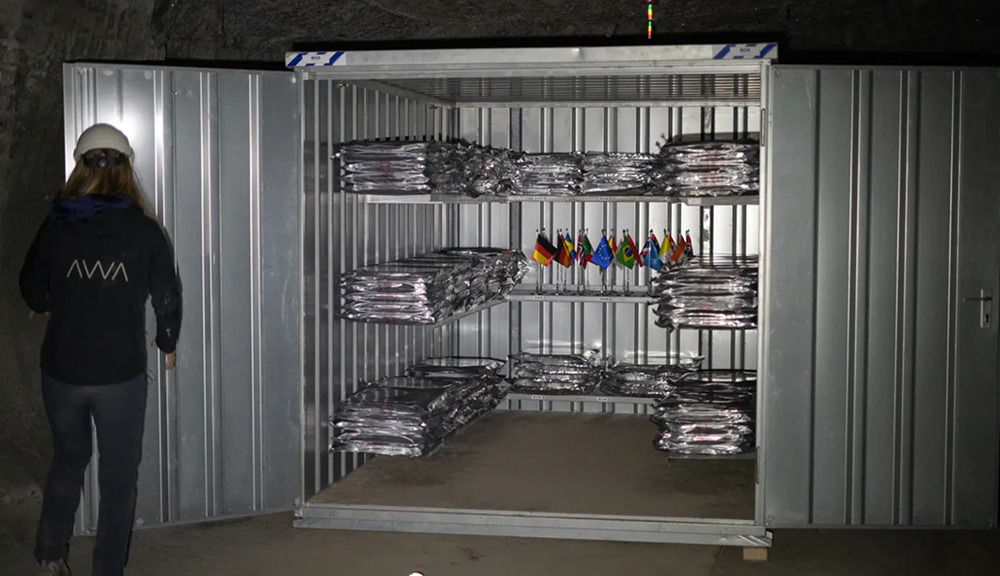
The volume of digital information grows at an unprecedented pace, yet archives face the challenge of ensuring it remains safe and accessible for centuries.
Read more
Get free access to the AWA platform and see how you can manage, preview, and prepare your preservation projects.
