By Sébastien Krajka, Heritage Coordinator at AWA
I love the fact that, thanks to globalization and the internet, I can read newspapers from all around the world with a single click. But it’s a double-edged sword. My screen is constantly flooded with alerts: a typhoon in Southeast Asia, a massive tornado in the Midwest, or catastrophic regional flooding in Europe.
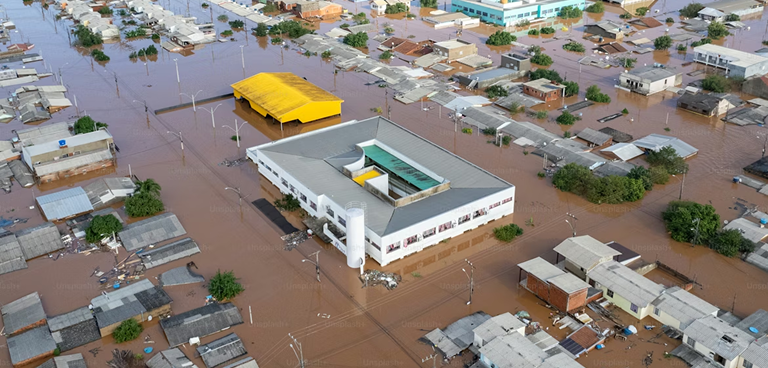
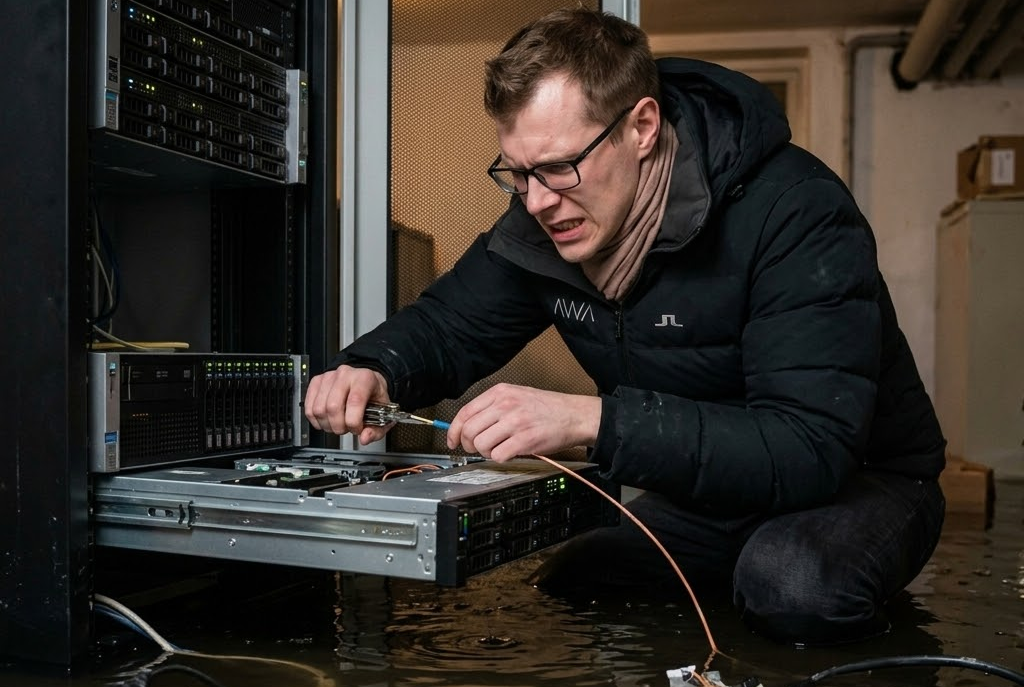
Having worked in heritage preservation for some time now, I’ve developed a bit of an occupational hazard. Every time I see these headlines, I don’t just see the weather; I see the invisible evaporation of data behind it. Yeah, I know there are maybe more urgent than that… but I can’t stop thinking about the servers sitting in those basements or the archives located in those flood zones.
I know what’s really happening behind the scenes.
Data becomes unavailable, and then, slowly but surely, it is simply gone.
We aren’t just talking about ancient manuscripts; it’s everything from vital civil records and land deeds to the deeply personal information stored on local PCs, laptops, and phones.
In the wake of these disasters, that history is lost. Forever.
This realization is what led to our “Fragile by Nature” series.
Data is a high-maintenance guest that lacks the “survival instinct” we often credit it with. It requires stability—a stability that our planet is increasingly unable to guarantee.
So, it forces us to ask a very blunt question: If the water levels rose at your archive’s coordinates tomorrow, would your history be built to swim, or is it destined to sink?
How the environment reclaims Memory
We often treat data as something ethereal, but nature has a way of reminding us that it is grounded in physical reality.
I think of the environment as a slow-moving eraser, constantly working to reclaim the space our records occupy. It isn’t just about the sudden disasters; it’s about the quiet, mechanical ways our memory is being dismantled.
Here is how I see nature’s eraser at work:
Heat trap
I’ve come to view digital archives as “live” organisms—they require a constant, cool heartbeat to survive. When a record-breaking heatwave strikes and the power grid buckles, we lose more than just connectivity. Without climate control, server hardware begins to degrade almost immediately.
In a non-ventilated room, the very components holding our history can physically warp or melt. We aren’t just losing access; we are losing the physical vessel.
Humidity creep
Bits and bytes don’t float in the air; they live on physical materials that are incredibly sensitive to their surroundings. The warming, damp climates that are becoming our new normal lead to “vinegar syndrome” in film and oxidative stress in magnetic media. It’s a slow, chemical rot that turns a nation’s cultural heritage into a pile of unreadable, acidic dust.
Geography of risk
The “somewhere” of our data has never been more dangerous. Many of our most precious cultural repositories were built in locations that made sense fifty years ago but are now on the front lines of risk. Whether it’s archives in coastal cities facing rising sea levels or museums in regions where wildfires are intensifying, we have placed our memory in the path of nature’s most destructive forces.
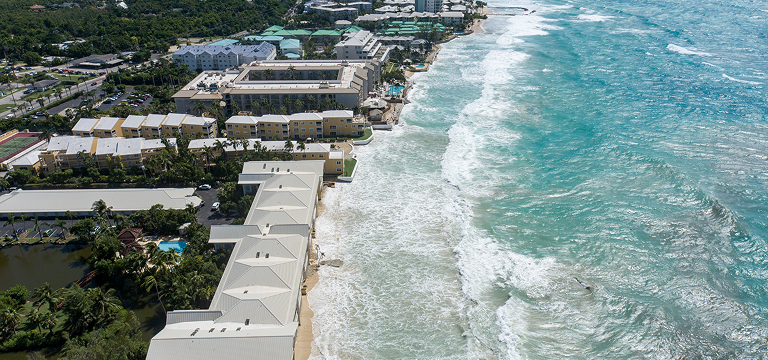
It’s a sobering thought: much of what we consider “permanent” is actually just waiting for the right weather event to be wiped away.
Civilizational anchor
To weather this environmental shift, we have to stop relying on “active” systems that require a constant handshake with a functioning world.
At AWA, our mission is to pivot from the cycle of constant maintenance to a philosophy of passivesurvival .
While traditional IT focuses on recovery—fixing things after they break—we focus on resilience, creating an environment where the data is never at risk in the first place.
Here is how we’re building that anchor:
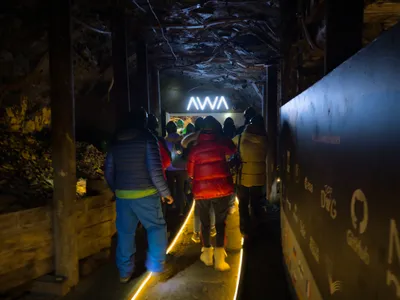
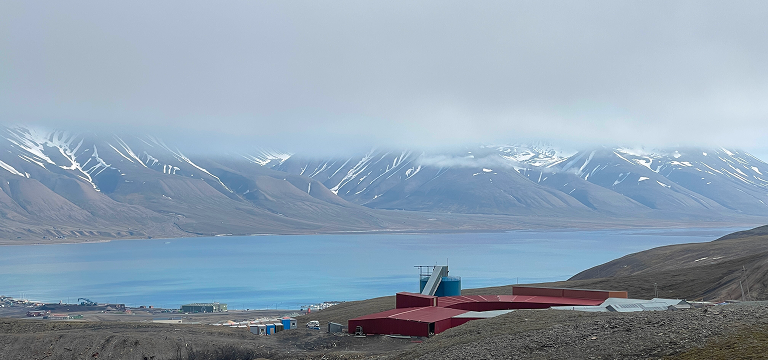
- Natural data refrigerator: Instead of fighting rising global temperatures with expensive, power-hungry cooling units, we’ve moved the data into the Arctic permafrost of Svalbard. It acts as a natural, zero-energy refrigerator. Deep inside the mountain, the archive remains indifferent to surface heatwaves or rising tides. We’ve essentially removed the “climate” variable from the preservation equation.
- Independence from the grid: We’ve broken the “heartbeat” addiction. By using piqlFilm, we store information on a medium that is Offline by Design. It doesn’t need electricity, a cooling system, or a network connection to survive for 500+ years. It simply exists, silent and stable, regardless of what happens to the power grid outside.
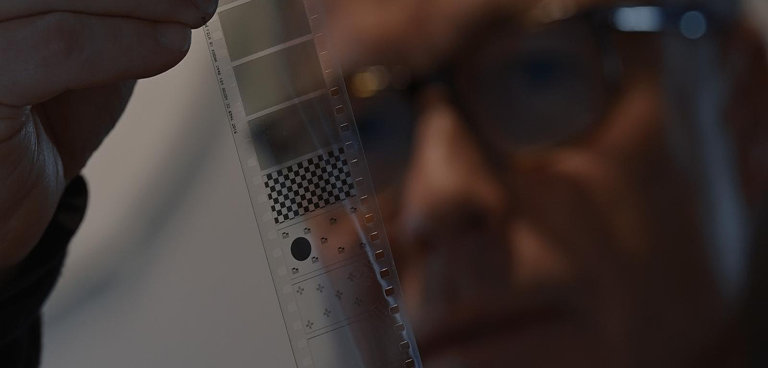
- Survival beyond software: History has taught us that industries can vanish just as easily as ecosystems. If the software industry were to be “washed away” tomorrow, most digital data would become an undecipherable riddle. Our approach is self-describing: we store data as high-resolution optical motifs. As long as you have a light source and a camera, you can retrieve the information. It is a bridge built to stand even if the engineers who built it are long gone.
Our philosophy: our goal isn’t to build a high-tech fortress that needs constant guarding; it’s to create a vault that can stay cold, dark, and silent for centuries. We are designing for the “Absence of a State”—a scenario where there is no help desk to call and no utility company to keep the lights on.
We protect history not because we expect the world to fail, but because we want to ensure that if it does, the blueprints to rebuild are still there, waiting to be remembered.
Heritage protection is a civilizational insurance against an unpredictable planet.
We don’t protect history for the sunny days; we protect it for the moments when the storm clears and we need to remember who we are.
If you are ready to ensure your legacy weathers the storm and stays safe through our 20-year bare ownership strategy, reach out to me directly here on LinkedIn or via email.