Abstract
Rjukan-Notodden Industrial Heritage site was inscribed in the UNESCO World Heritage List in 2015 for its outstanding value as an example of a new global industry in the early 20th century.
World Heritage sites are considered of outstanding universal value for humankind and are supposed to be transferred to the next generations as testimonies of nature’s and human history. The opportunity to store information about the creation and development of this amazing site for more than 1000 years to come was considered at the heart of what UNESCO World Heritage Convention suggests its State Parties and sites should work towards. Preserving its overall description, history and information has also a risk management perspective.
What is the industrial heritage of Rjukan-Notodden?
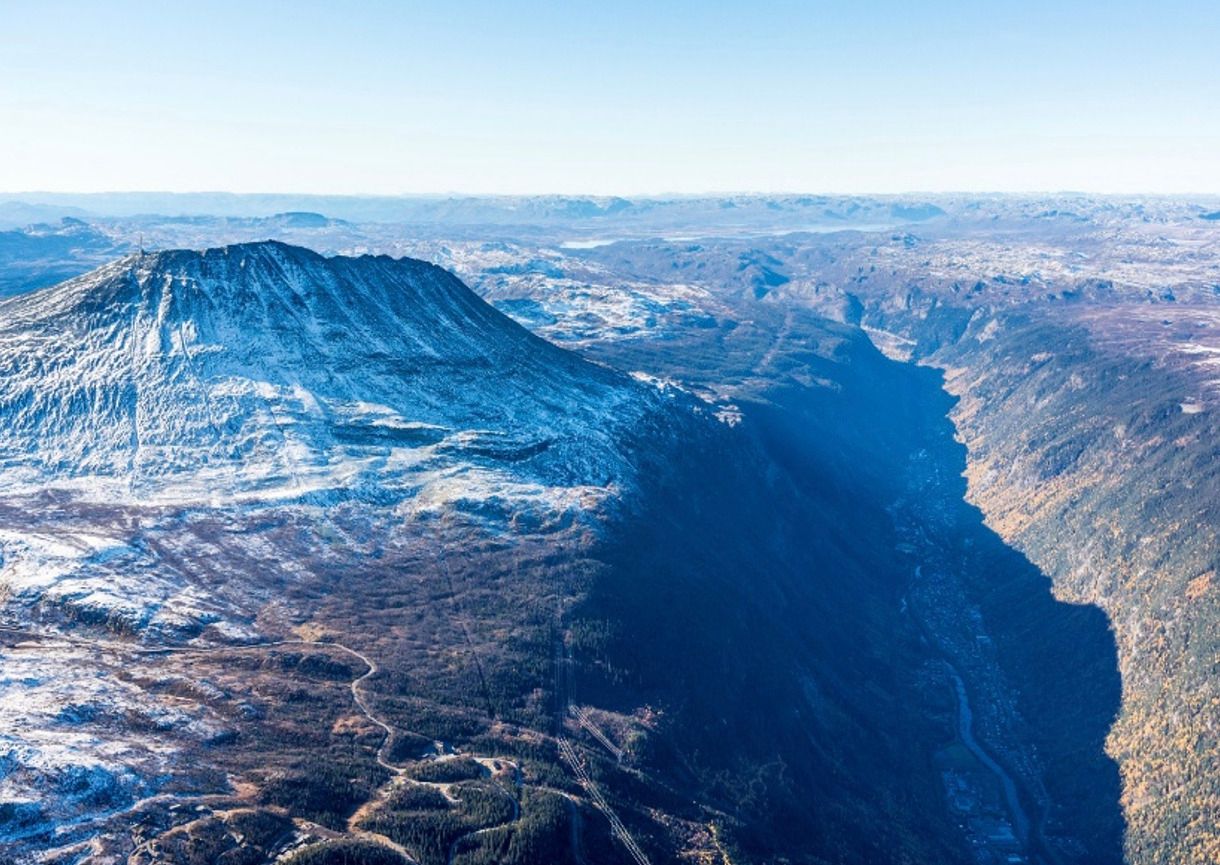
The site is a 93 km long, 38 850 hectares trans municipal site that follows the waterways from the Møsvatn basin in Vinje, through Rjukan in Tinn and ends in Notodden at Heddalsvannet. It represents an exceptional combination of industrial themes and assets tied to a dramatic Norwegian landscape that enabled the production of large amounts of hydroelectricity to serve the global market’s demands for artificial fertilizer, originally produced extracting Nitrogen from the air.
What material is saved in the Rjukan-Notodden Industrial Heritage disk?
The disk contains a selection of both historical and contemporary information about the creation of one of the most significant industries from the 20th century. From descriptions of the technology for the extraction of the Nitrogen from the air, to the establishment of Norsk Hydro, its expansion and the later recognition of the industrial ensemble and its landscape as a World Heritage site, this collection of archival documents, bibliography, photographs, videos and audio represent the core of the World Heritage site’s values and why it is such a relevant part of humankind’s history.
From February 26th 2026, the information about the UNESCO World Heritage site Rjukan-Notodden Industrial Heritage and belonging data will be deposited in the Arctic World Archive and will be there for eternity.
The partnership that today brings the site to the future
Rjukan-Notodden Industrial Heritage Site is today managed by a collaboration between Tinn, Notodden and Vinje municipalities and Telemark County. Other partners include the Climate and Environment Ministry of Norway, the Norwegian Directorate for Cultural Heritage, the Norwegian Industrial Workers Museum, the University of South-East Norway, several volunteer organizations and local individuals that in one way or another contribute to the preservation, dissemination, and sustainable development of this amazing piece of living human history. Juliana Strogan, the World Heritage Coordinator of the site, together with her colleague Hans Olav Stegarud, municipal World Heritage Coordinator for the Municipality of Tinn can be contacted in relation to this project.