By Sébastien Krajka, Heritage Coordinator at AWA
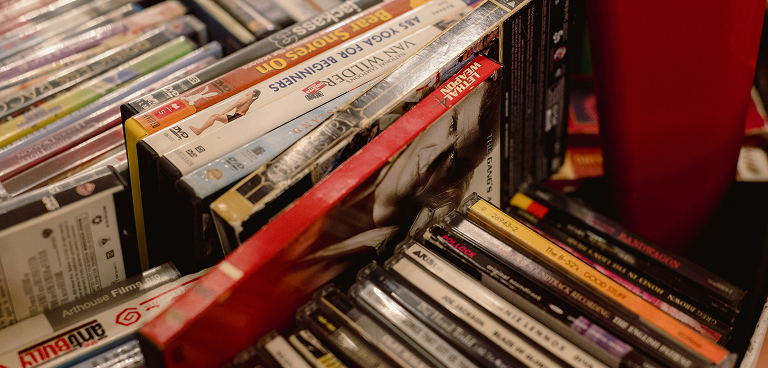
A few weeks ago, I was digging through a box of old work files — the kind of box you keep telling yourself you’ll sort through “one day.” At the bottom, buried under a tangle of forgotten cables, I found a stack of CD-ROMs. Neatly labeled, carefully stored. Someone — a past version of me — had clearly cared deeply about what was on them.
I couldn’t read a single one.
Not because they were scratched. Not because they’d been flooded or burned.
Simply because nothing in my home, nothing in my office, had a drive to read them anymore. The data was all there, perfectly intact, sealed inside a shiny plastic disc — and completely, silently, unreachable.
That moment stuck with me in a way I didn’t expect.
A flood announces itself.
A fire leaves ash.
But obsolescence? Obsolescence doesn’t destroy your data. It just quietly builds a wall around it and walks away.
I’ve spent a part of my career thinking about the enemies of preservation. We talked already about the dramatic ones — wars and natural disasters.
But technical obsolescence is the slow, invisible process by which perfectly preserved data becomes permanently unreadable — not because nature took it, but because the technology that created it simply moved on.
Here’s the question I find myself asking more and more: What is the point of preserving something that nothing can ever read again?
The illusion of “saved”
There’s a deeply human instinct at play when we hit save or drag a file into a backup folder. It feels like an act of preservation. Responsible, even. Job done. History secured.
But I’ve come to see that instinct as one of the most dangerous myths in my field.
Saving data and preserving data are not the same thing. Not even close. Saving is a snapshot. Preservation is a promise — a commitment that the information will remain not just intact, but accessible and intelligible, decades or centuries from now. And that second part is where we are quietly, systematically failing.
There are really two distinct threats at work here, and I think it’s worth naming them separately because they require completely different responses.
The first is mediaobsolescence : the physical carrier — the hard drive, the disc, the tape — degrades or dies. The second, and in many ways the more insidious of the two, is formatobsolescence : the carrier survives perfectly, but the software ecosystem needed to interpret what’s on it has simply ceased to exist.
You can have a flawlessly preserved disc and still be staring at a locked box with no key.
The Library of Congress estimates that the average lifespan of a digital file format before it becomes obsolete or unsupported sits at around 5 to 10 years for proprietary formats****.
That number should stop us cold. Because most of what we are archiving today — right now, this year — is being stored in formats that may be uninterpretable within a single decade.
We aren’t losing history to disaster. We are quietly locking it away in formats nobody will be able to open.
Current arsenal — and cracks
Let me walk you through the tools we are actually relying on to preserve our collective memory. I want to be fair to each of them — they were all, at some point, genuinely good solutions. But “good fornow” and_“built for centuries”_ are very different standards, and it’s time we held them to the right one.
Hard Disk Drives (HDD)
For decades, the HDD was the undisputed workhorse of data storage. Affordable, high-capacity, familiar. Walk into almost any archive, any institution, any back office — you’ll find stacks of them.
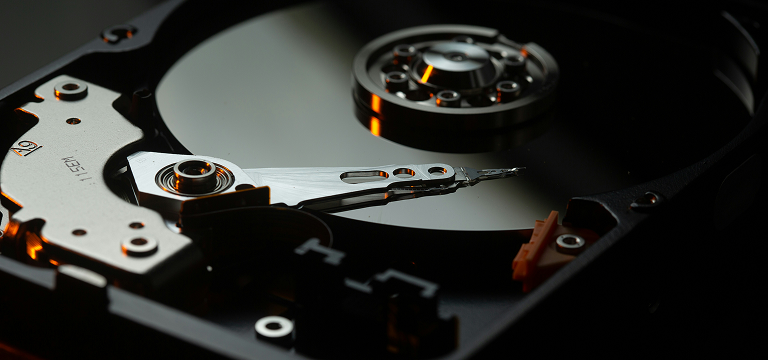
The problem is mechanical. HDDs are, at their core, precision physical machines — spinning platters, moving arms, microscopic tolerances. They were never designed for eternity. They were designed for convenience.
Backblaze, which operates hundreds of thousands of drives in its data centers, publishes annual failure rate reports consistently showing rates between 1% and 5% per year depending on the model — with sharp increases after year three.
A 1-5% annual failure rate doesn’t sound catastrophic until you’re managing thousands of drives, or until you realize the archive you trusted for a decade has been silently degrading the entire time.
Solid State Drives (SSD)
SSDs feel like the natural evolution — no moving parts, faster, sleeker. And for active daily use, they are genuinely superior. But for long-term, passive storage? The picture gets considerably darker.
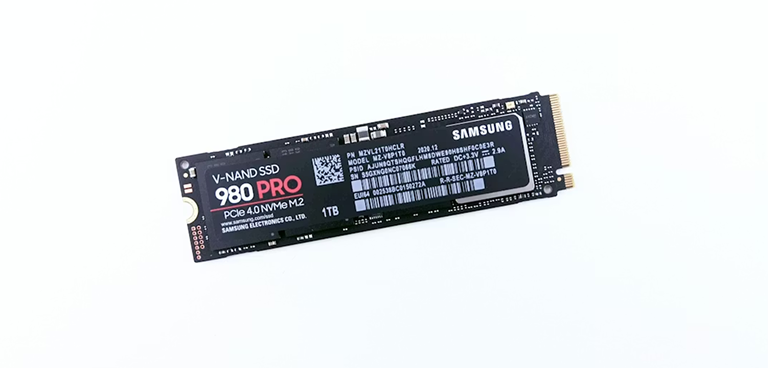
The core issue is that NAND flash memory — the technology inside every SSD — degrades with each write cycle. More troublingly for archiving purposes, SSDs require power to maintain their charge. Leave one unpowered in a warm environment and the data doesn’t wait for you.
JEDEC standards confirm that enterprise SSDs stored unpowered at 40°C may retain data for as little as three months.
Three months. For a medium we are routinely trusting with irreplaceable records.
Cloud storage
I understand the appeal. I do.
“It’s in the cloud” has become the modern equivalent of “it’s in thesafe.” Effortless, invisible, apparently infinite. It has convinced an entire generation that the storage problem is essentially solved.
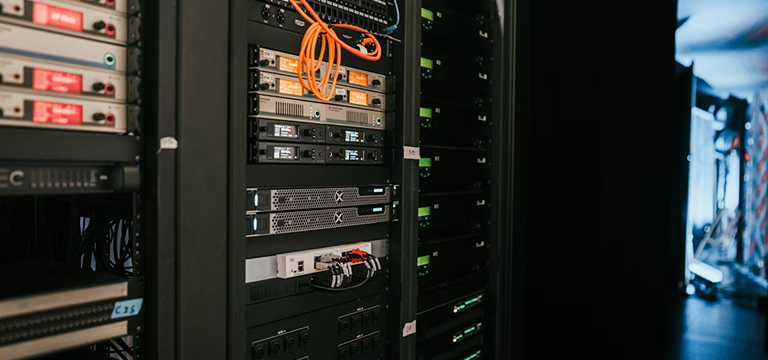
But the cloud is not a place. It is someone else’s hard drive, in someone else’s building, running on someone else’s business model. And that someone else can — and does — disappear.
When Google shut down Stadia in January 2023, users were given a narrow window to retrieve their data before it was gone. No disaster, no flood, no cyberattack — just a corporate decision.
Beyond the survival of the company, cloud storage introduces a dependency that I find genuinely troubling from a preservation standpoint: it requires continuous payment, continuous connectivity, and continuous confidence that the provider is migrating your files forward as formats evolve. None of those things are guaranteed over a century.
Storing is not preserving. Uploading is not protecting. I keep coming back to that distinction.
Magnetic tape
Tape often surprises people — it sounds archaic, but it remains widely used in enterprise archiving precisely because it is relatively stable and cost-effective at scale. I have a grudging respect for it.
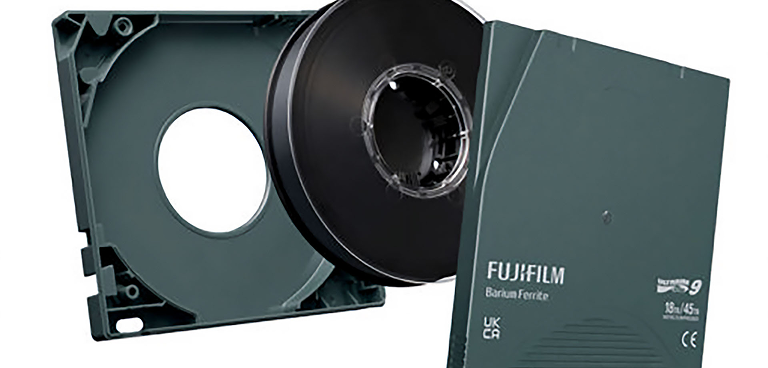
But tape carries its own quiet trap: generational lock-in. The LTO format — the industry standard — evolves in generations, and each new generation of hardware only reads two generations back. Miss a migration cycle and your data becomes stranded on a format that no compatible reader exists for anymore.
LTO-9 drives can read LTO-8 and LTO-7 tapes — but nothing older. Every generation left behind is a generation of data at risk of permanent inaccessibility.
It’s a treadmill. And if you ever stop running — if the budget dries up, if the institution restructures, if the vendor discontinues the format — the treadmill doesn’t pause. It just ejects you.
Every single one of these solutions shares the same fundamental flaw: they were designed for the present. And the present, as I’ve learned in this field, has a very short shelf life.
Software layer
Even if you solve the hardware problem entirely — even if your drives never fail, your tapes never degrade, your cloud provider never shuts down — there is still a second wall waiting for you. One that most people never even see coming.
Can the file actually be opened?
This is the question nobody asks when they’re archiving. And it is, in my experience, the one that causes the most irreversible damage.
Think about the software ecosystems that have simply vanished within living memory. WordPerfect. Lotus 1-2-3. Early AutoCAD formats. Countless proprietary database structures used by local governments, hospitals, and cultural institutions throughout the 1980s and 90s. The files still exist on their original media. The programs that created them do not. And without the program, the file is not a document — it’s an encrypted riddle with no decoder.
This is what I call format lock-in: data imprisoned inside a proprietary container that only one vendor ever held the key to. When the vendor moves on, the key disappears with them. Nobody inherits it. Nobody is legally obligated to maintain it. It simply ceases to exist.
And here is the example I come back to every single time, because nothing illustrates the paradox more sharply:
The BBC Domesday Project, completed in 1986, stored an ambitious interactive record of British life on proprietary laser discs. By 2002 — just sixteen years later — the hardware and software needed to access it had virtually disappeared. Meanwhile, the original 1086 Domesday Book, written on animal skin with iron gall ink, remained perfectly legible after nine centuries.
I find that example almost unbearable in its irony. 900 years versus 16. The monks won.
The uncomfortable truth is this: every timewe store data in aproprietary format,we are notmaking apreservation decision.We aremaking a bet. A betthat the company survives, that the format remains supported, that someone somewhere keeps the lights on for our files.
That is not a strategy. That is hope. And hope is not an archive.
Civilizational blind spot
Here is the paradox that I find myself returning to, over and over, in almost every conversation I have in this field.
We are producing more data than at any other point in human history. Exponentially more. Every year, the curve steepens. We are digitizing our past, documenting our present, and archiving everything in between with an ambition and a scale that no previous civilization could have imagined.
And we are storing almost all of it on media with a lifespan measured in years.
There is something almost tragic about that gap. The more urgently we feel the need to preserve, the faster we reach for tools that were never designed for permanence. We are, without quite realizing it, building the largest and most fragile archive in human history.
I think about the institutions and individuals who digitized entire collections over the past two decades — painstaking work, real investment, genuine care — onto formats and media that are already beginning to age out. That work was not wasted. But without active migration, without a long-term strategy, it is quietly moving toward a cliff edge that nobody marked on the map.
We don’t have a data shortage. We have a preservation attentiondeficit . We celebrate the act of capturing and storing, and we systematically underinvest in the far less glamorous work of ensuring that what we captured can still be read in fifty years.
That, to me, is the civilizational blind spot. Not ignorance. Not malice. Just a collective, comfortable assumption that because the file exists today, it will be accessible tomorrow.
It won’t. Not without a fundamentally different approach to what preservation actually means.
Beyond the Technology Cycle
Every solution I’ve described in this article shares the same underlying assumption: that the technological ecosystem surrounding the data will continue to function. That there will be power, compatible hardware, supported software, a solvent company, a maintained network. That someone, somewhere, will keep running the treadmill.
At AWA, we made a decision to stop building on that assumption entirely.
The question we asked ourselves was not “how do we keep up with the technology cycle?” It was “how do we design something that survives when the technology cycle ends?” That is a fundamentally different engineering problem. And it leads you to fundamentally different answers.
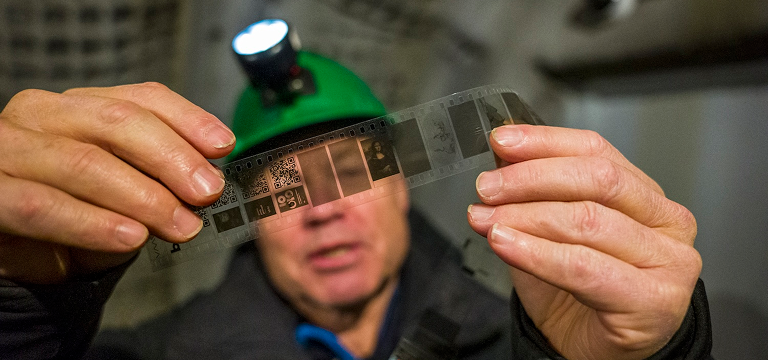
The first answer is mediumindependence . We store data as high-resolution optical motifs on piqlFilm — a format that requires no proprietary software, no specific operating system, no particular hardware ecosystem to survive. As long as you have a light source and a lens, the information is physically readable. We have essentially removed the software layer from the preservation equation altogether. There is no format to become obsolete because there is no format in the traditional sense. There is just light, and what it reveals.
The second answer is self-description. One of the quiet failures of most digital archives is that the data and the instructions to read it are stored separately — and the instructions are almost always the first thing to disappear. We store the decoding information directly alongside the data itself, physically, on the same medium. A future reader — whether that is in fifty years or five hundred — does not need to know anything about our era’s technology to access what we left behind. The archive explains itself.
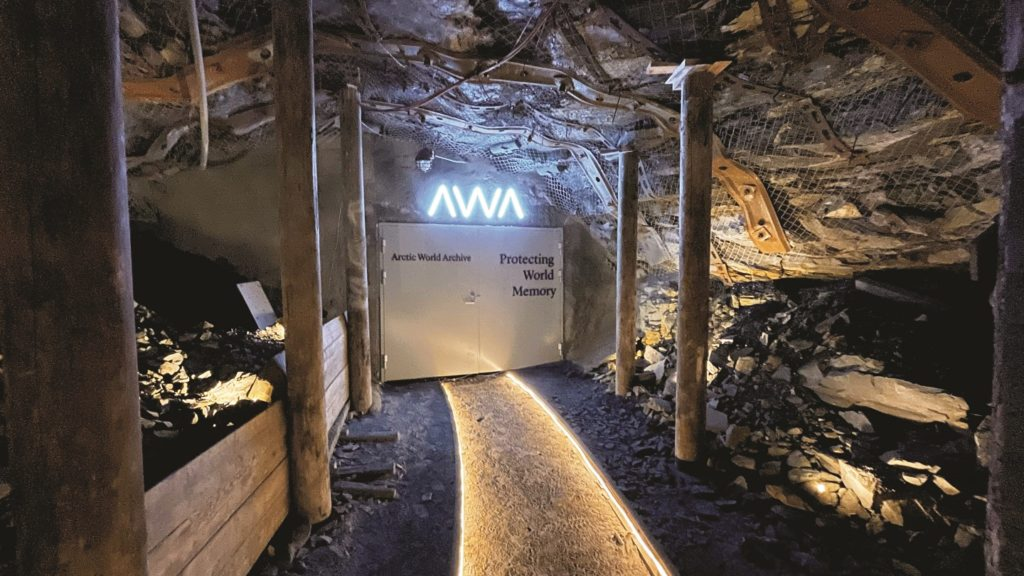
The third answer is location asphilosophy . Storing the archive deep inside the Arctic permafrost of Svalbard is not just a climate decision — though the natural refrigeration matters enormously. It is a statement about the kind of permanence we are aiming for. The mountain does not depend on a power grid. It does not require a maintenance contract. It does not have a renewal date. It simply endures, indifferent to whatever the technology landscape looks like on the surface.
We are not designing for the next software update. We are designing for the Long Silence — for the scenario where there is no help desk, no utility company, no compatible reader available off the shelf. Where the only thing standing between the future and the past is the quality of the decisions we made today.
That is the standard I think preservation deserves. And it is the only standard, in my experience, that the weight of history actually demands.
A question I ask every depositor
Every time I sit down with a new depositor, at some point in the conversation I ask them to do something simple.
Open your most important file.
The one that matters most.
The one that would hurt to lose.
Now ask yourself: will anything be able to open that file in fifty years? In a hundred? If the institution that created the software no longer exists, if the platform has shut down, if the hardware has moved on two generations — is your history still readable?
If your answer is “I don’t know” — and in my experience, it almost always is — then that is exactly where our conversation needs to begin.
Data without accessibility is not preservation. It is just delayed loss.
If you are ready to ensure your legacy outlives the technology that created it and stays readable through our 20-year bare ownership strategy, reach out to me directly here on LinkedIn or via email.